
GO BACK TO THE WEBSITE HOME PAGE
DESCRIPTION:
The archpriest church
The archpriest church of Arquà Petrarca boasts very ancient origins: already in a document from 1026 it is recorded that, by order of the Bishop of Padua, the income from the lands and the tithes of the parish were destined for the monastery of San Pietro in Padua.
Over the centuries, the church underwent several modifications. In the pastoral visit of 1449, a now- lost rear portico was mentioned, while in 1677, thanks to the intervention of Archpriest Bellini, the façade was raised and renovated.
Despite its simplicity and humility, the church plays a fundamental role in the history of Arquà: for six years, in fact, it housed the remains of Francesco Petrarca, before they were transferred to the external sarcophagus that today dominates the square.
THE EXTERIOR
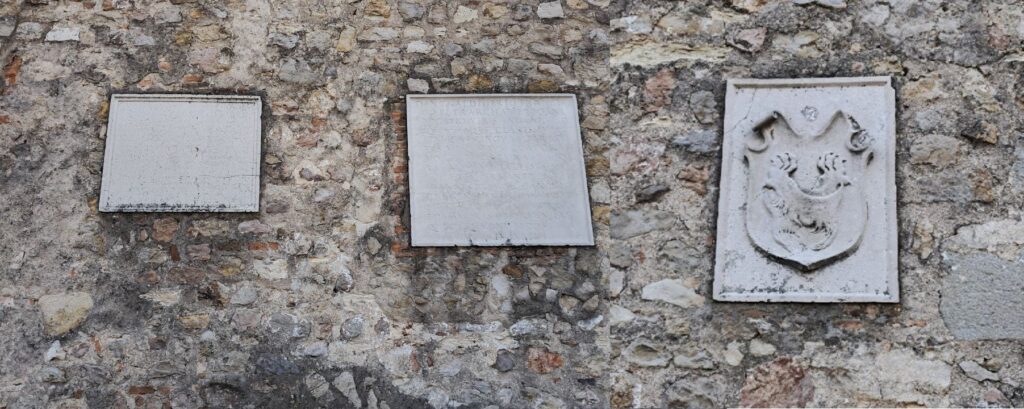
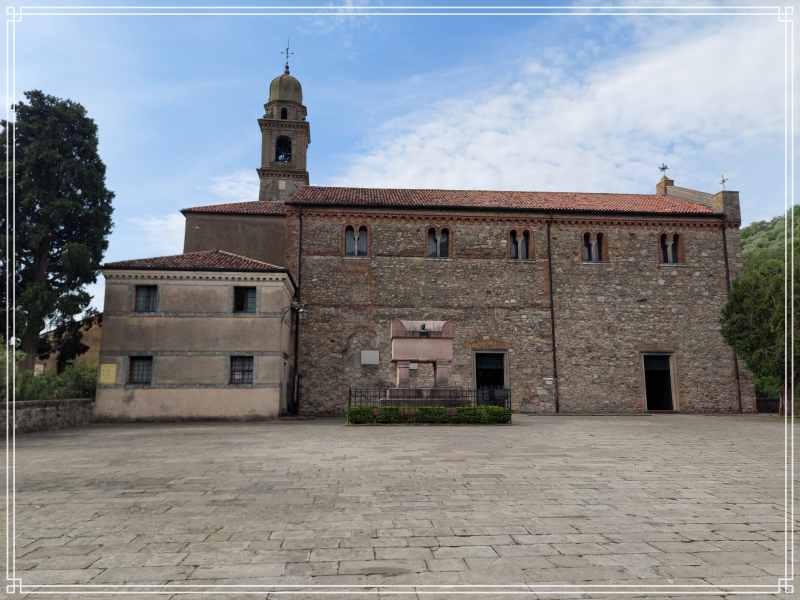
On the side of the archpriest church, facing the tomb, two historical plaques of great interest can be seen.
The first, placed in 1524 by Archpriest Brevio, canon of Ceneda, celebrates simultaneously Dante, Petrarca, and Boccaccio, the three great authors who marked Italian literature.
The second plaque, dating to 1564, recalls the restitution to the Municipality of Arquà of the locality of Janzane (Regianzane), an area on the Ventolone that had previously been usurped by Valsanzibio.
To the right of the plaques, there is also a coat of arms with crossed lion paws, probably referring to the emblem of the Estensi Angelieri, a noble family from Este known for having governed Ferrara.
On the occasion of the Petrarch anniversary of 1874, the archpriest church received a new neoclassical façade, designed by engineer Legnazzi: cold and symmetrical, it reflected the rigorous style of the time. However, this structure disappeared in 1926, when, following the project of architect Scolari from Venice, the façade was raised and expanded in Romanesque style, extending as far as the fountain, as we can admire it today. The works were carried out under the skilled direction of Archpriest Don Giuseppe Dalla Longa.
On the opposite side of the church, in 1874, there was a mortuary cell, later demolished and subsequently rebuilt, used as a sacristy and baptistery.
A curious detail from the past concerns the churchyard in front of the church, where Petrarca’s tomb stands: for a long time, pigs and other animals roamed freely there. This aroused the indignation of the bishops, who ordered the construction of a wall. However, despite the erection of the barrier, the recommendations were repeated several times between 1449 and 1713, without ever achieving full compliance.
The raising of the church took place in 1609, an occasion during which the pre-existing paintings were covered with new decorations. The most significant restorations and cleaning works date back to 1960, which restored the church to its current appearance, preserving its thousand-year-old history.
THE INTERIOR
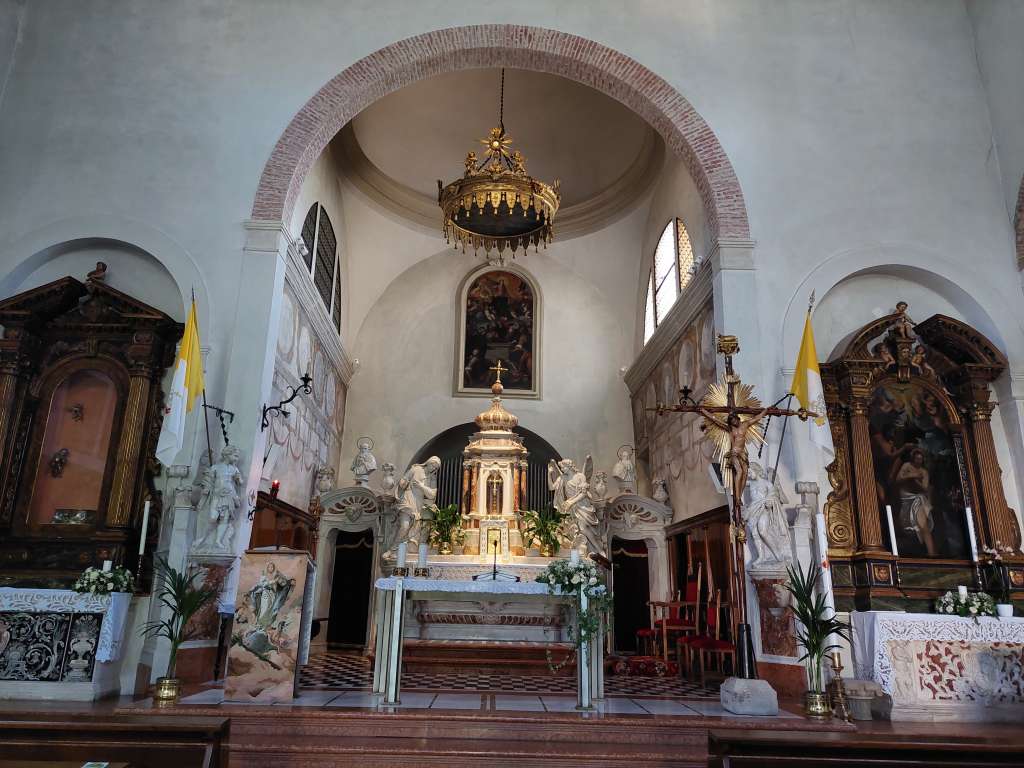
The archpriest church of Arquà Petrarca houses three altars of notable artistic and historical interest.
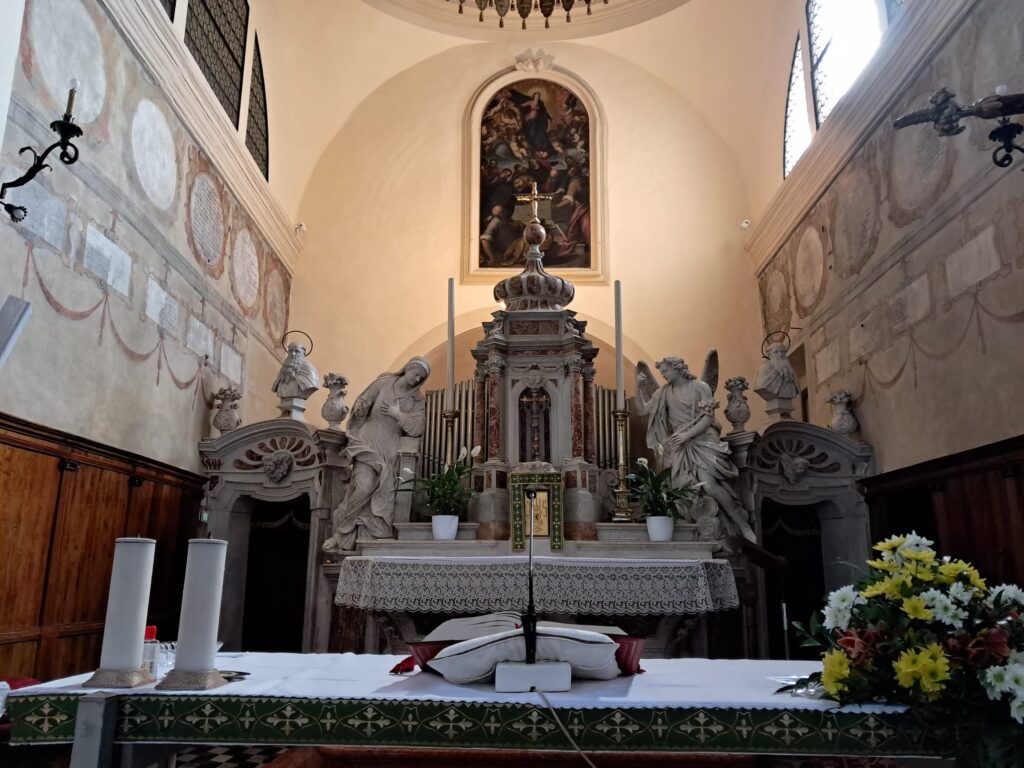
1. The main altar
Made of red and white marble, it is enriched by two discreet statues of the Annunciation and by two busts of Camaldolese saints: Saint Romuald and Blessed Paolo Giustino, sculpted in Carrara marble. On the sides, two putti in high relief are surmounted by two vases with vine shoots.
On the front of the altar, there are also two candle holders, the work of Francesco Rizzi in the 17th century, coming from the suppressed convent of Rua and transferred here in 1808. The plinths bear the name of the author beside the figures of the Angel and the Annunciated Virgin.
Above the altar hangs a large arched canvas (1.45 x 2.72 meters) depicting the Assumption, signed by Palma il Giovane (Jacob Palma F.). Before restoration, the work suffered from rain entering through a crack in the wall, but today it can be admired in all its splendor.
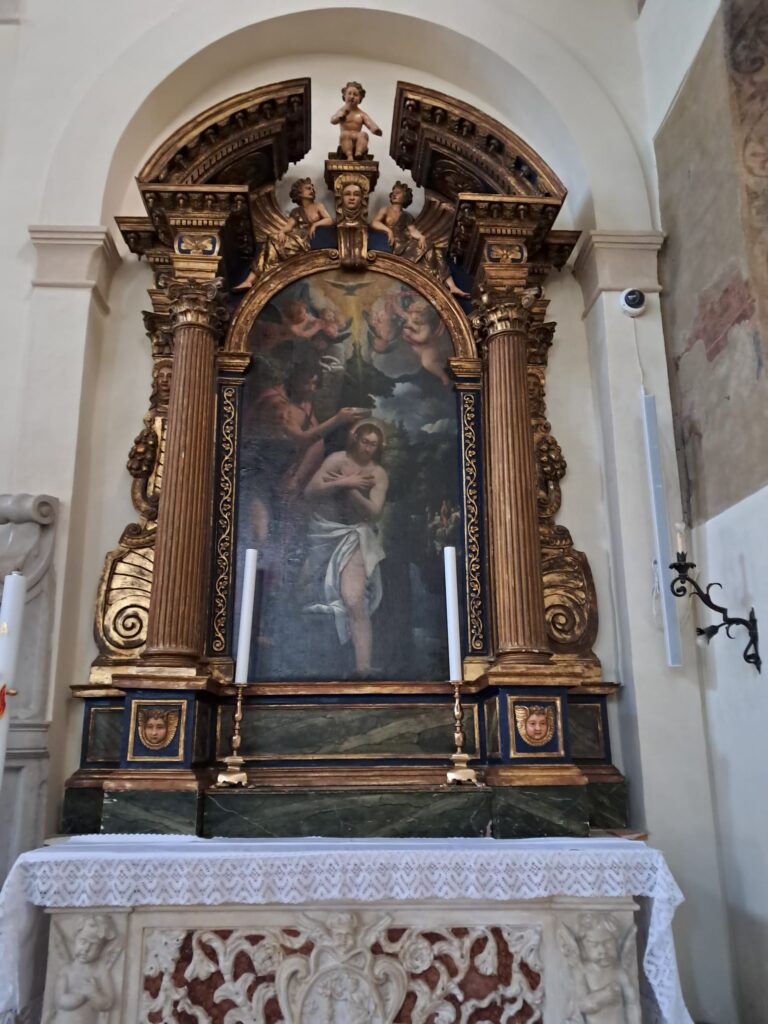
2. The altar to the right of the main altar
This altar houses a painting of the Baptism of Jesus, attributed to Pietro Damini from Castelfranco (1592–1631). The antependium, in red and white marble with floral motifs, shows a certain simplicity and rusticity, a sign of the inexperienced and “rural” hand of the author, and is dated around 1680.
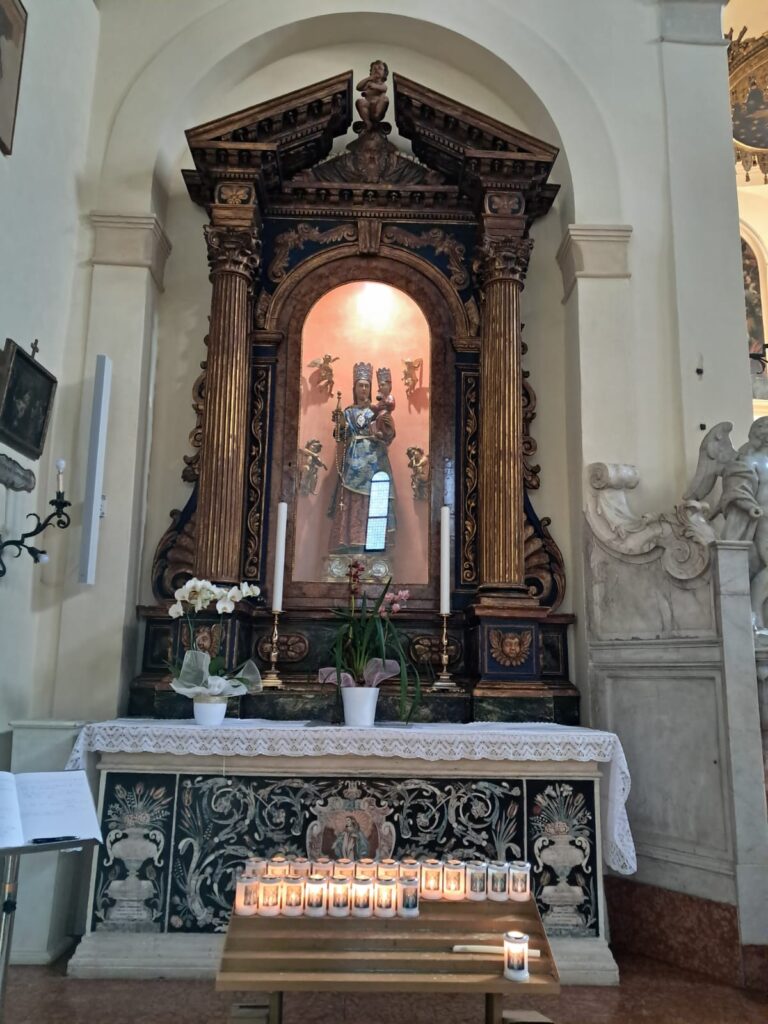
3. The altar to the left of the main altar
The altarpiece depicts the Virgin of the Rosary, also attributed to Pietro Damini. Already in 1644, the work was praised as “very beautiful,” although today some critics consider this description excessive. The antependium, however, is a true masterpiece: made in Florentine mosaic in 1670 under Archpriest Don Bellini, it is decorated with tulips, hyacinths, goldfinches, butterflies, and a roundel with the Assumption.
THE WORKS
New restorations were carried out in 1840.
Over the centuries, the archpriest church underwent several restoration works. Already in 1840, maintenance work was carried out, but a particularly significant restoration took place in 1915, which made it possible to reveal the original height of the church—lower than its current appearance—with the splayed windows characteristic of the period.
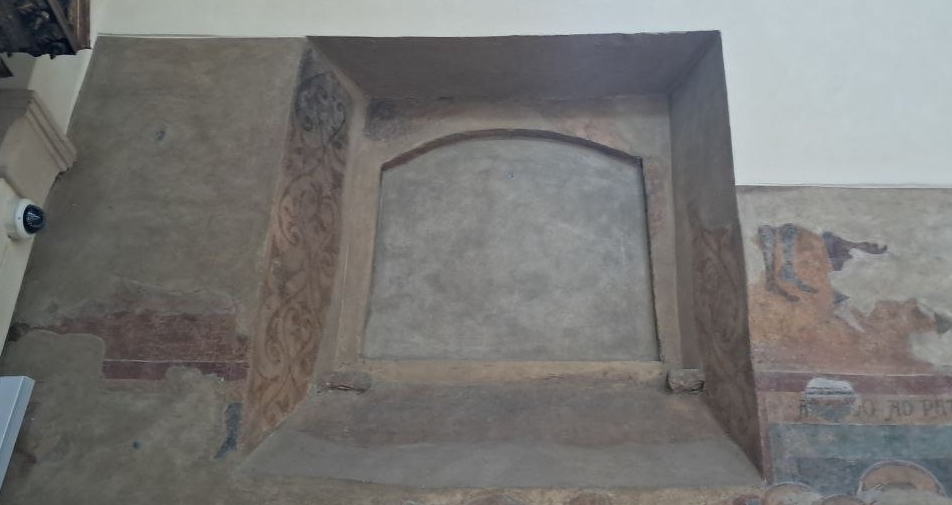
The internal walls are composed of three superimposed layers, and the oldest layer dates back to the second half of the 13th century, a period of Veneto-Byzantine influence, and is relatively thin.
Fortunately, the fourteenth-century plaster was applied without damaging the pre-existing surface layer. This allowed the older paintings to re-emerge in the gaps of the plaster with all their original freshness, thus preserving valuable artistic evidence of the past.
TO THE LEFT OF THE MAIN ALTAR
Inside the archpriest church, moving from the left side of the main altar,
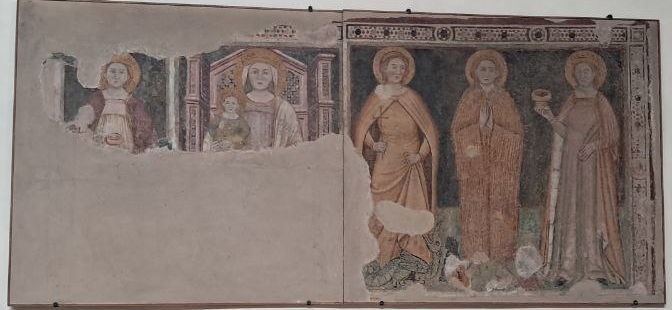
two enthroned Madonnas can be seen, flanked by some standing female saints. Among them stands out a Magdalene (the second from the right), particularly venerated by the patrons of the paintings, who are represented as tiny kneeling figures at her feet, in a gesture of devotion.
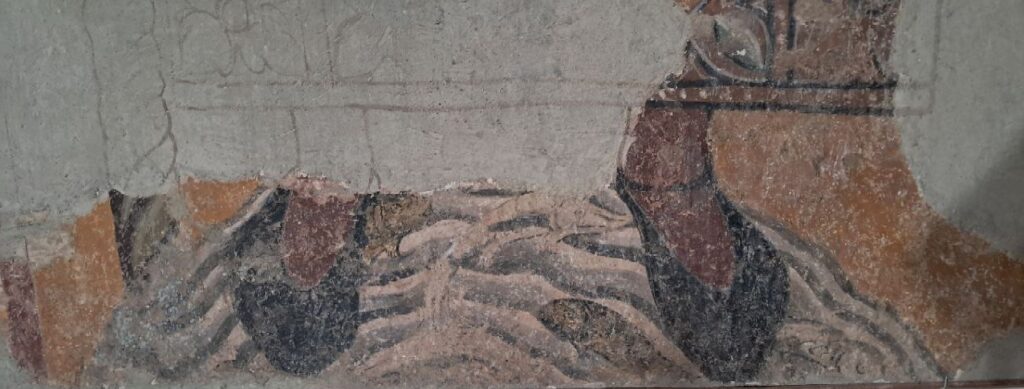
Lower down, one can notice some imposing feet, probably belonging to a Saint Christopher. Considering the size of the feet and the proportions of the body, the figure must have reached about eight meters in height. Thanks to a skillful play of perspective, the feet seem to rotate as the visitor moves through the church, creating a dynamic and engaging effect.
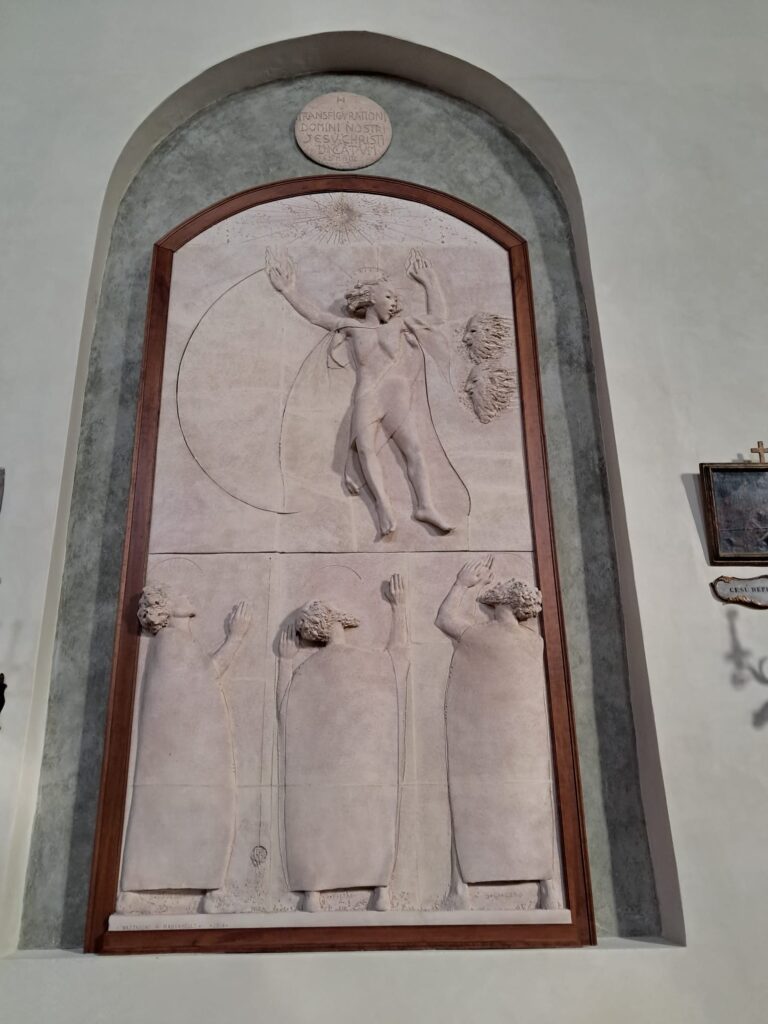
In 1926, another portion of the wall decoration was brought to light: it shows three saints gesturing and shouting toward a winged figure with a haloed head, adding movement and intensity to the pictorial narrative of the walls.
RIGHT WALL
On the right wall with respect to the main altar of the archpriest church, frescoes and works of great fascination can be admired. In the lower part, some haloed saints are depicted, dressed in elegant robes and arranged in a gesture of offering. Their beautiful use of color creates an almost three- dimensional effect: the figures seem to stand out from the background, even without the use of light and shadow, giving them a surprisingly natural look.
In the upper part of the wall, there is a Madonna holding a blessing child in her arms. The figure appears rigid, dressed in a stole encrusted with gems and stars, and surrounded by the Baptist and other saints, who give solemnity to the scene.
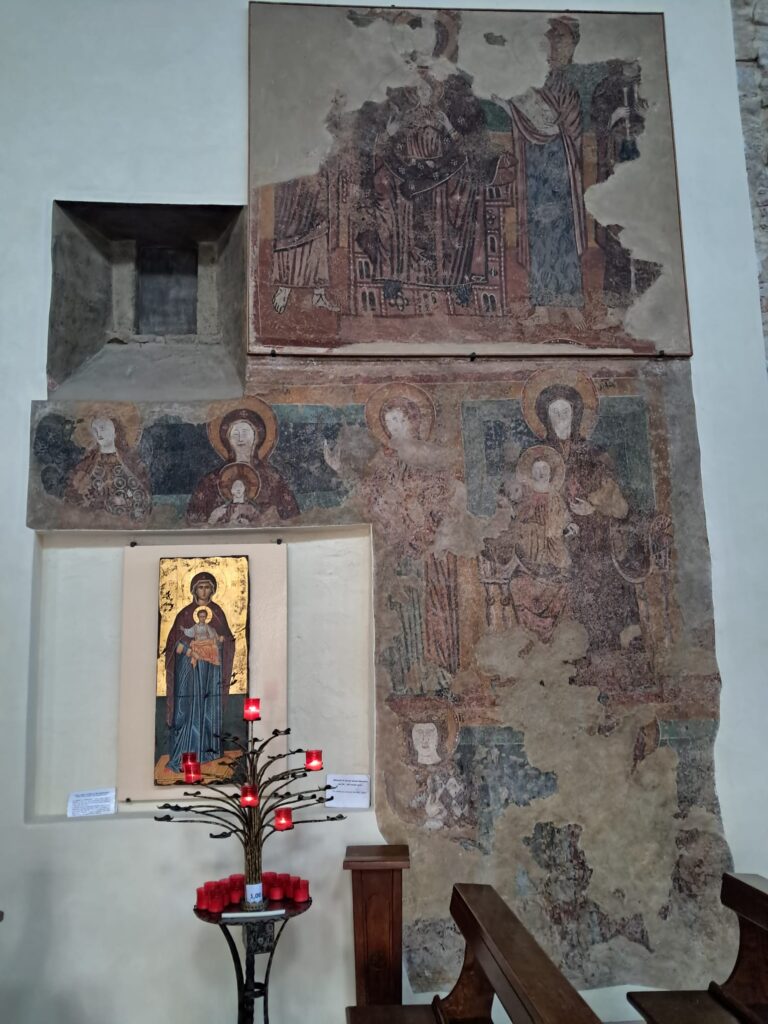
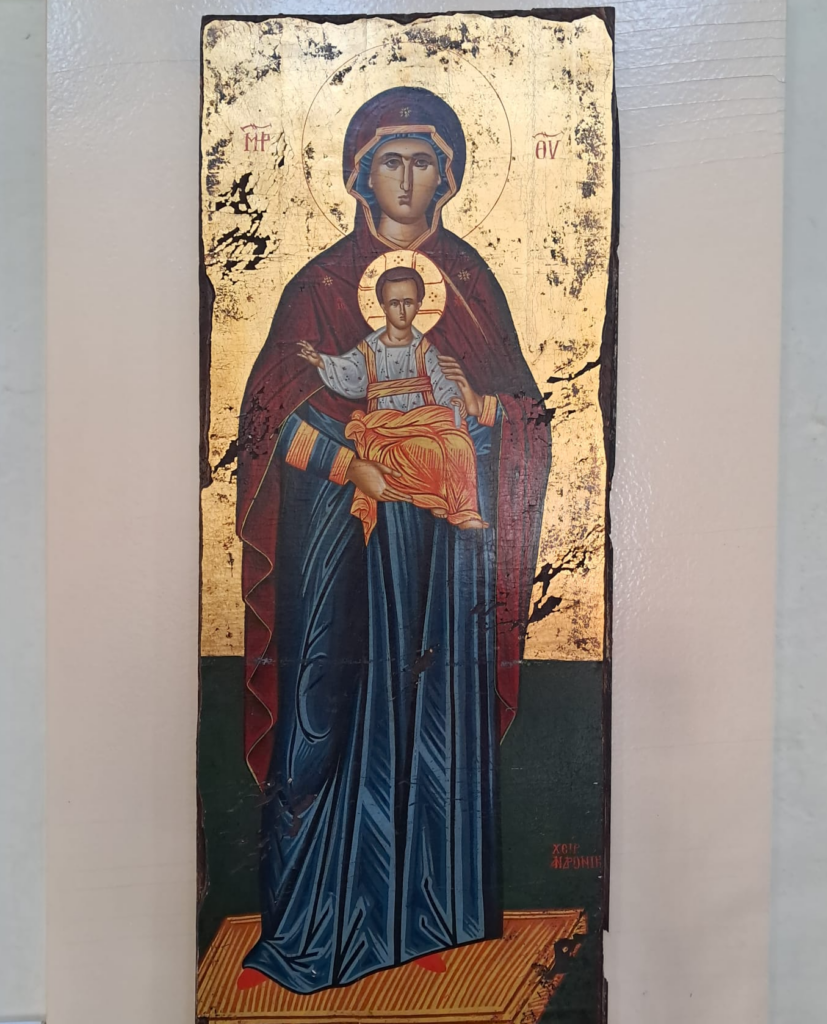
Next to these frescoes, a Madonna with Child painted on a wooden panel with a golden background shines with its own light, catching the visitor’s gaze and recalling the devotion and art of past times.
Among them are the 13 traditional Stations of the Cross
Let’s leave the pleasure of discovering these small paintings to the visitor.
- Jesus is condemned to death
- Jesus receives the cross on his shoulders
- Jesus falls under the cross for the first time
- Jesus meets his most holy mother
- Jesus is forced to carry the cross
- Jesus falls under the cross for the second time
- Jesus consoles the women of Jerusalem
- Jesus falls under the cross for the third time
- Jesus is stripped and given gall to drink
- Jesus is nailed to the cross
- Jesus is raised and dies on the cross
- Jesus is taken down from the cross
- Jesus is laid in the holy sepulchre
THE BELL TOWER
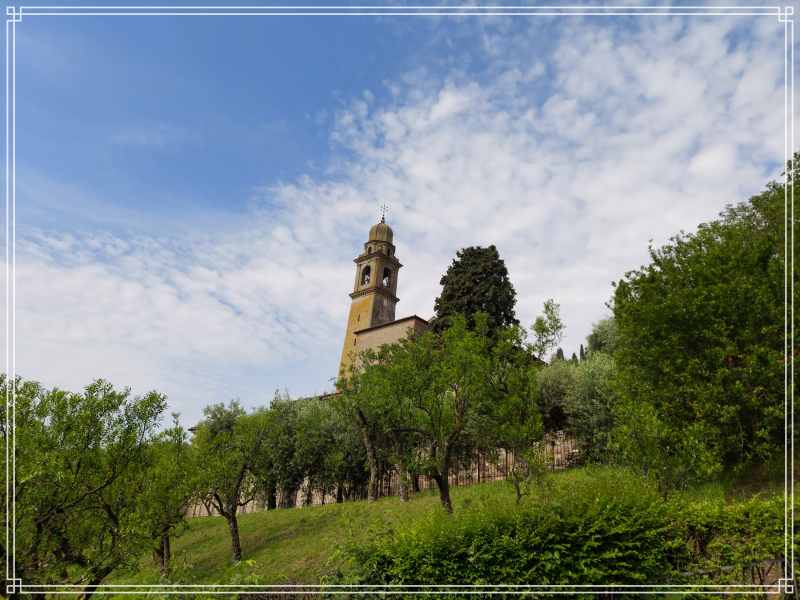
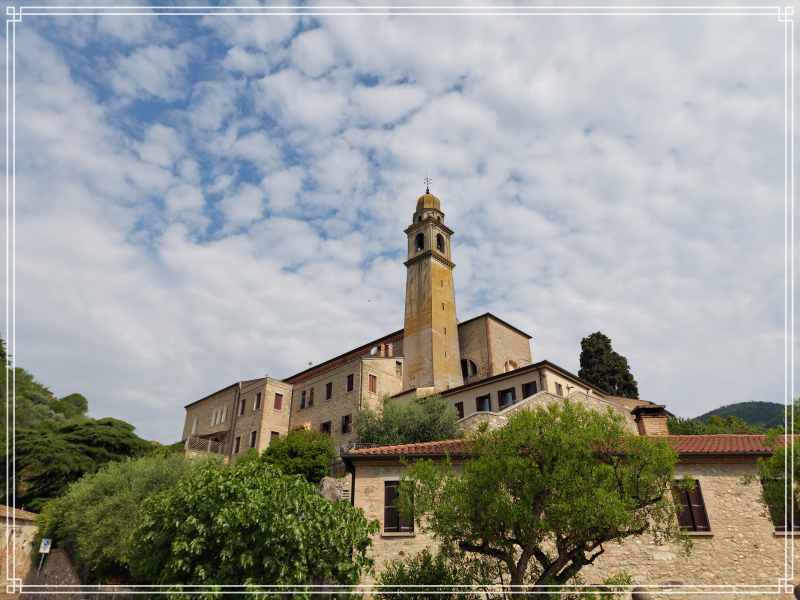
The bell tower of Arquà Petrarca dates back to 1580, when the clock was already mentioned in the “Orders” as “which for several months has not been working.” In 1667, the bell tower was destroyed by lightning, but over the following centuries it underwent several reconstructions.
In 1847, the belfry was rebuilt due to decay, starting from mid-height of the windows, based on the design of engineer Maschietti from Monselice. To correct what was considered an “awkward style,” the segmental arch windows were lengthened and made pointed, while the bell tower was crowned with Ghibelline battlements. During this intervention, the the twin-arched window of the square shaft were also walled up. of the square shaft were also walled up.
In 1928, as it was once again in ruins and at risk of collapse, the bell tower was restored to its original appearance, following Maschietti’s design, which in turn was inspired by the prints of Giorgi (1635) and Chevalier (1831). The battlements were removed, and the roof was rebuilt with four slopes, as we see it today.
As in the past, a small room at the base still serves as a sacristy, preserving the continuity of use and the history of this symbolic building of the village.