
GO BACK TO THE WEBSITE HOME PAGE
DESCRIPTION:
LA FONTANA
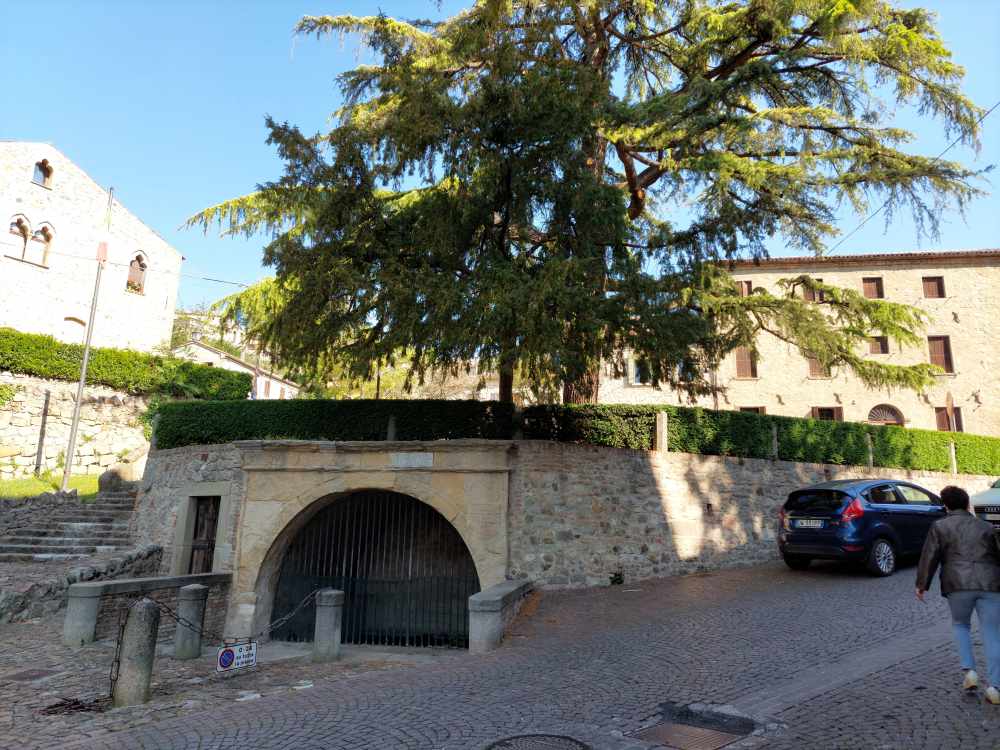
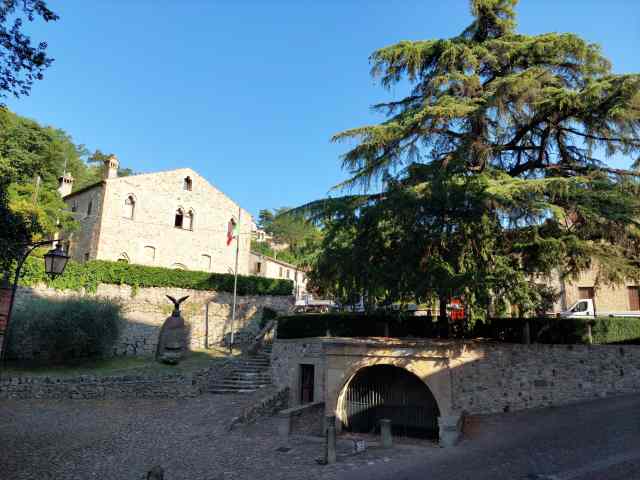
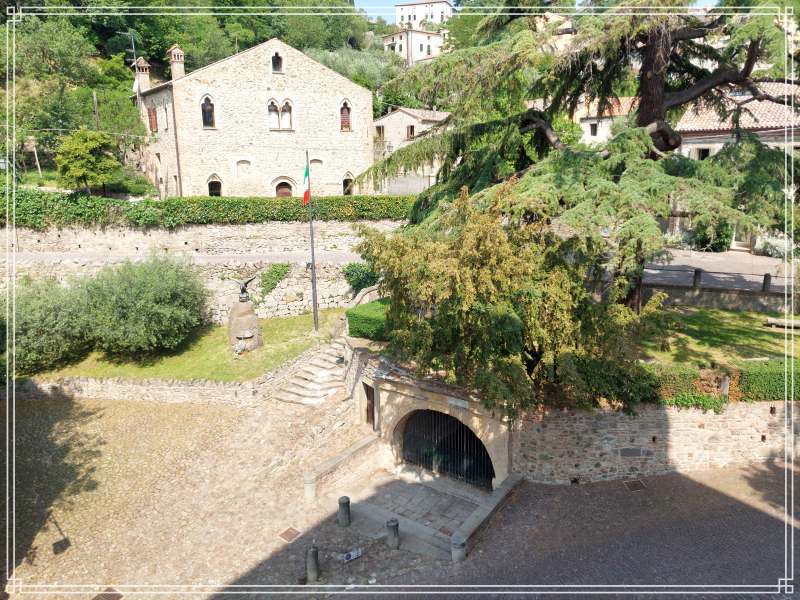
The Fountain of Arquà Petrarca is one of the most evocative spots in the square, wrapped in history and legend.
According to popular tradition and the Latin inscription once found on the arch, the fountain was said to have been commissioned by the poet himself, bringing together five small springs.
However, there is no direct testimony from Petrarch confirming its construction. What we do know for certain is a document from 1235 written “near the fountain of Arquà,” most likely referring to this very one, as no other fountains are recorded in the village.
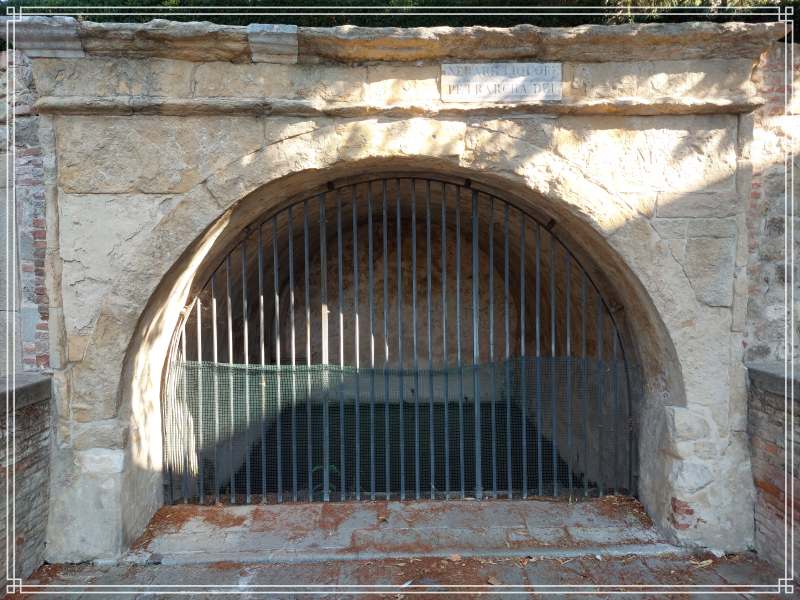
The arch framing the fountain is made of Nanto stone and supports the vaulted structure.
The first known restoration dates back to 1547, during the vicariate of Manfredino Conte, whose name and coat of arms are engraved on the right side of the arch.
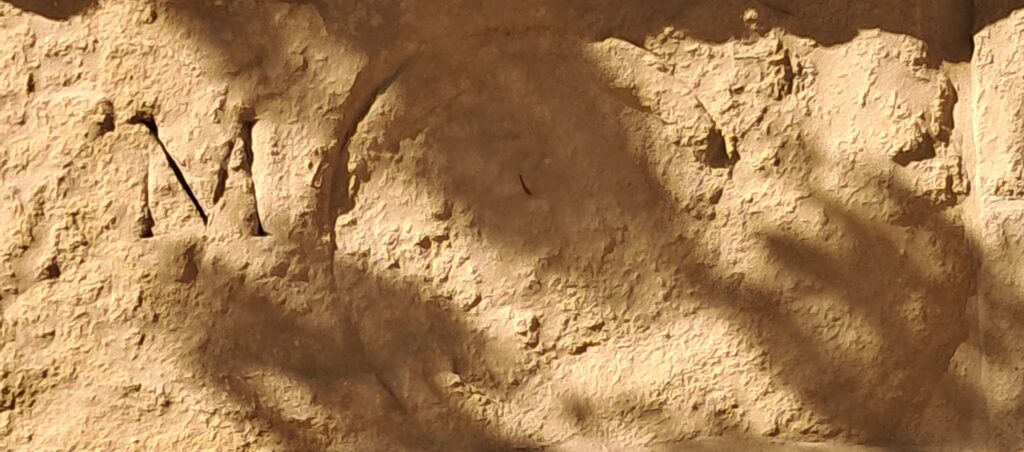
On the left, the initials F.P. – Francesco Porcellini, his successor as vicario – can be seen, accompanied by the emblem of a rearing piglet.
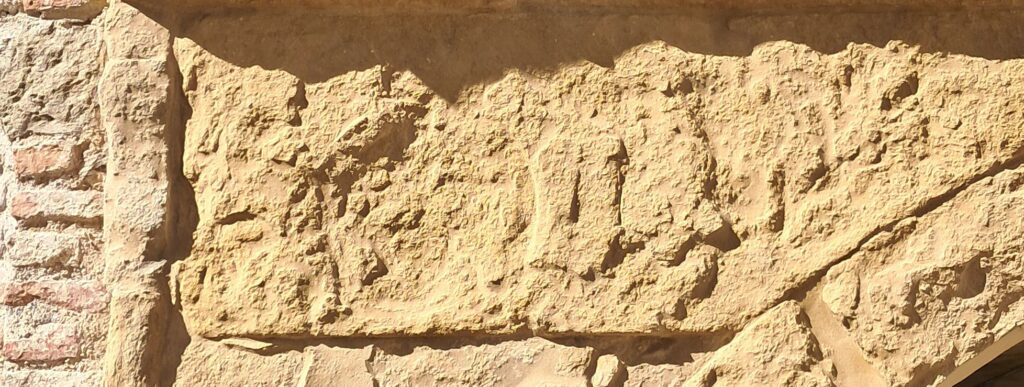
Above the arch of the Fountain of Arquà Petrarca, now largely lost, there once appeared a Latin distich:

“FONTI NUMEN INEST, HOSPES: VENERARE LIQUOREM, UNDE BIBENS CECINIT DIGNA PETRARCHA DEIS.”
It can be interpreted as:
“A divine spirit dwells in this spring, O stranger: revere this water, from which drinking, Petrarch sang verses worthy of the gods.”
The arch was restored in 1831, and later, probably in 1856, part of the inscription was renewed, though some of the final letters were lost.
The fountain opens into a vaulted chamber, perhaps dating from the 13th century, which is reached by three steps as wide as the arch itself. This space shelters the basin collecting the springs, which is deeper than it appears. In 1938, during the construction of the aqueduct with the contribution of the Government, a protective wall was raised to safeguard the drinking water from dust and external elements.
Next to the fountain, on the upper right side, there once stood an old house mentioned in Zaborra’s records, which housed an oil mill and a salt warehouse. This building was demolished in 1856 and replaced by a small garden.
The water from the fountain then flows down into the troughs and the tiered washhouse.
GO BACK TO THE MAP