
GO BACK TO THE MAP
GO BACK TO THE WEBSITE HOME PAGE
DESCRIPTION:
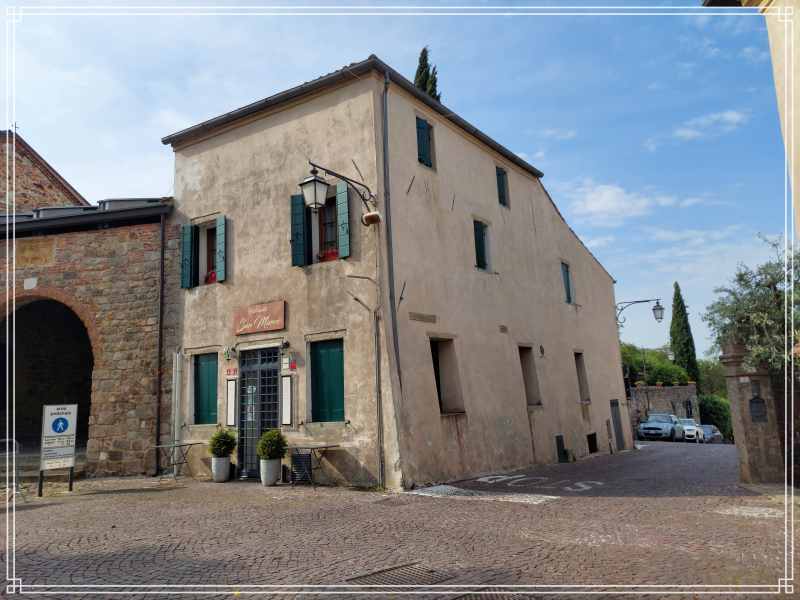
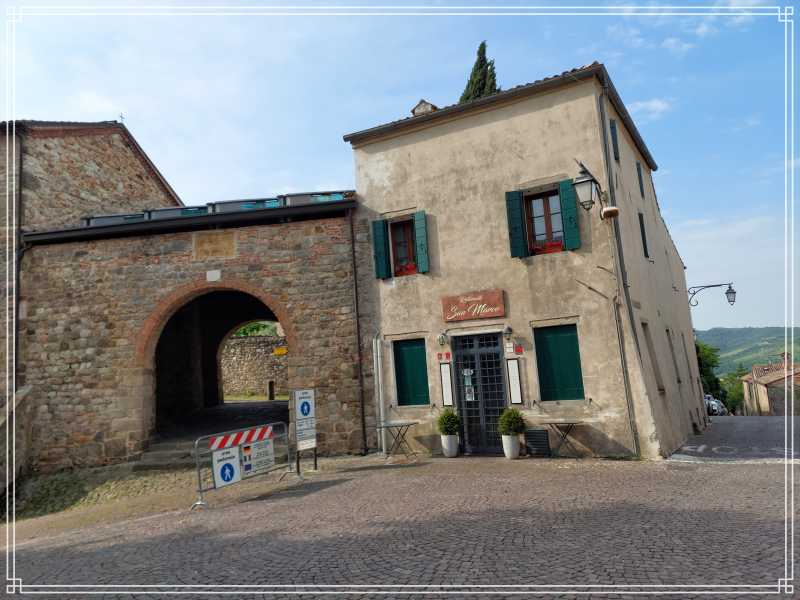
The Loggia del Vicario, built around 1200, was the place where the heads of families of the village were summoned by the ringing of a bell to discuss community matters together with the Vicario.
The main entrance opens onto the square through an arched doorway that is still preserved today, topped by a Lion of Saint Mark, the symbol of the Republic of Venice. Beneath the lion, a marble plaque commemorates the Vicario Galeazo Badoero with the inscription:
GALEAZO BADOERO VICARIO
ANN. MDLXXXXIV
“Galeazo Badoero, Vicario, in the year 1594.”
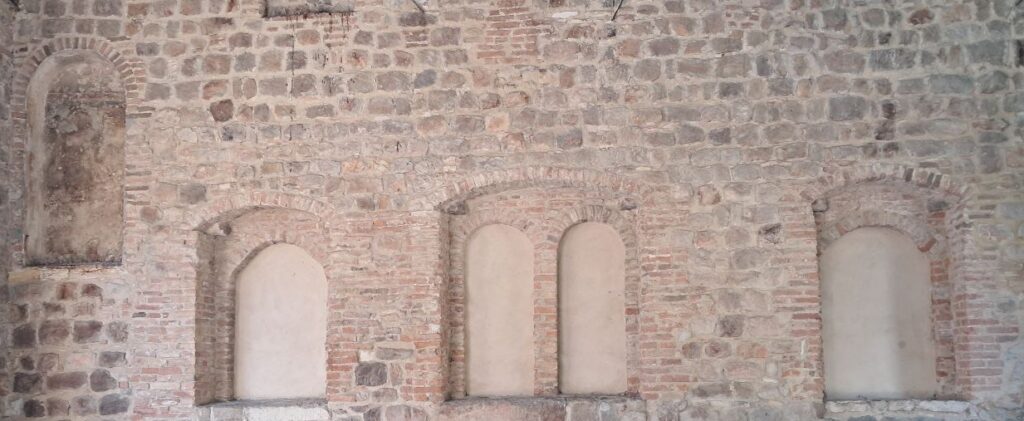
On the opposite side are two arches, partially restored in 1504 and again in 1783.
The stone hinges show that, in the past, the entrance was closed by gates.
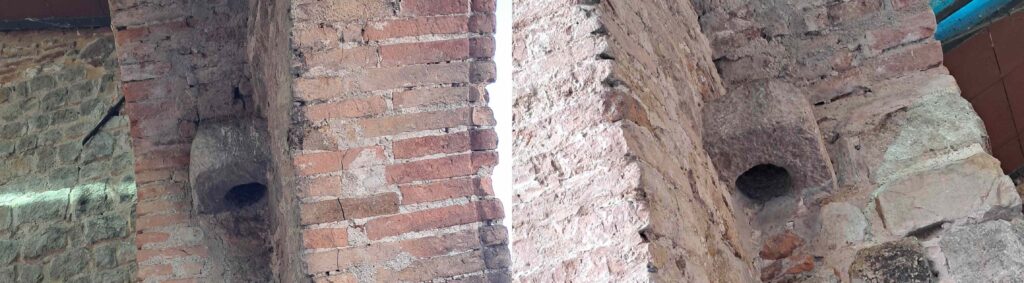
The house of the Vicario stood adjacent to the loggia, sharing one of its walls. As early as the 18th century, the house had fallen into ruin, forcing the magistrate to live elsewhere and pay rent.
In 1828, the roof of the loggia was demolished, leaving it uncovered. A side door connects the building to the oratory. Today, a modern canopy covers the loggia — a recent addition not present in the original structure.
Inside the Loggia del Vicario, the walls were once decorated with images of Petrarch and Laura, accompanied by verses by Lorenzo Pignoria, as recorded by the historian Tommasini. Unfortunately, these decorations are no longer visible today.
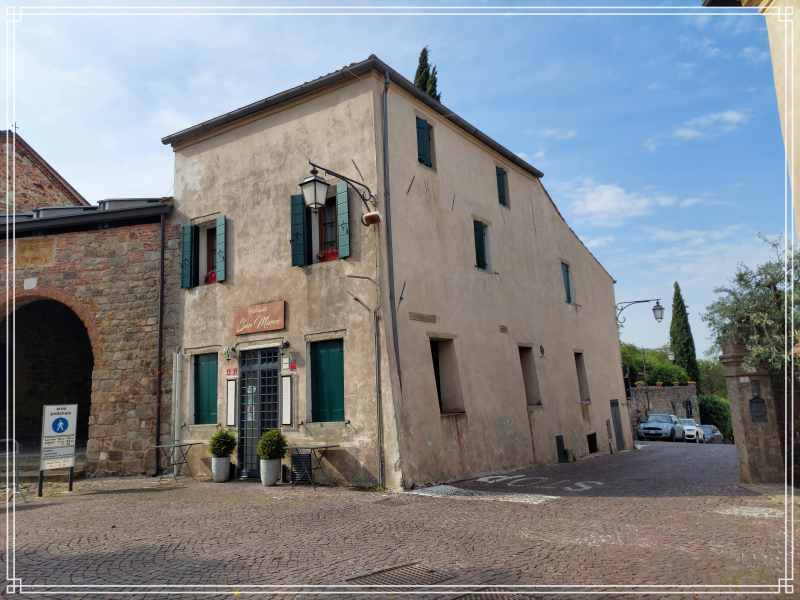
Where the current tavern stands once stood the house of the Vicario, of which two single-lancet windows and one double-lancet window still remain — precious traces of the ancient building.
On the wall, there is also a 14th-century fresco depicting Saint Julian, who mistakenly kills his own parents, while the donor is shown kneeling before the scene. Unfortunately, the fresco is now quite faded and difficult for visitors to interpret.
In side the loggia:
Some of the coats of arms left by the Vicari at the end of their mandates still remain inside the loggia. These coats of arms, generally linked to the families of origin of the Vicari and often accompanied by characteristic mottos, tell an important part of the administrative history of the village.
Entering through the arched doorway, visitors can admire — starting from the left and moving clockwise — the various coats of arms displayed along the walls:
1 – A rampant goat and the initials P.P., indicating Prosdocimo Pasini, Vicario of Arquà.
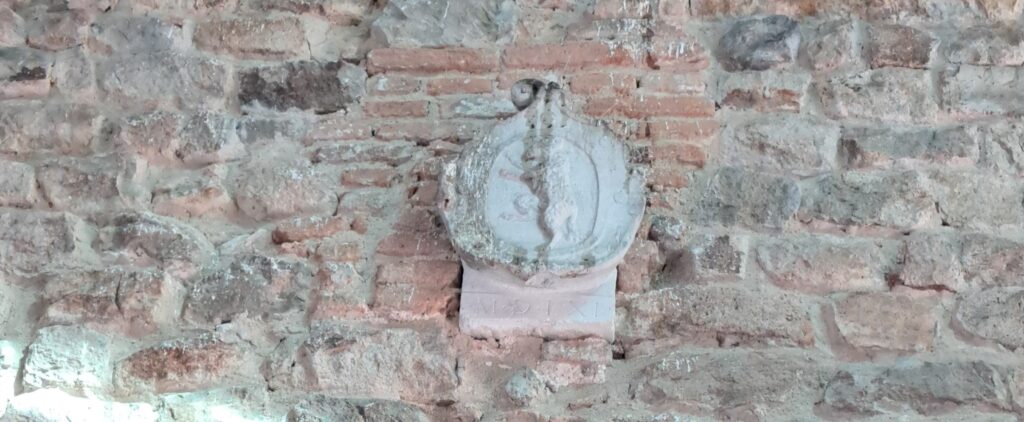
Beneath the coat of arms is a plaque bearing the date XDLXI.
2 – A coat of arms with a helmet supported by sirens
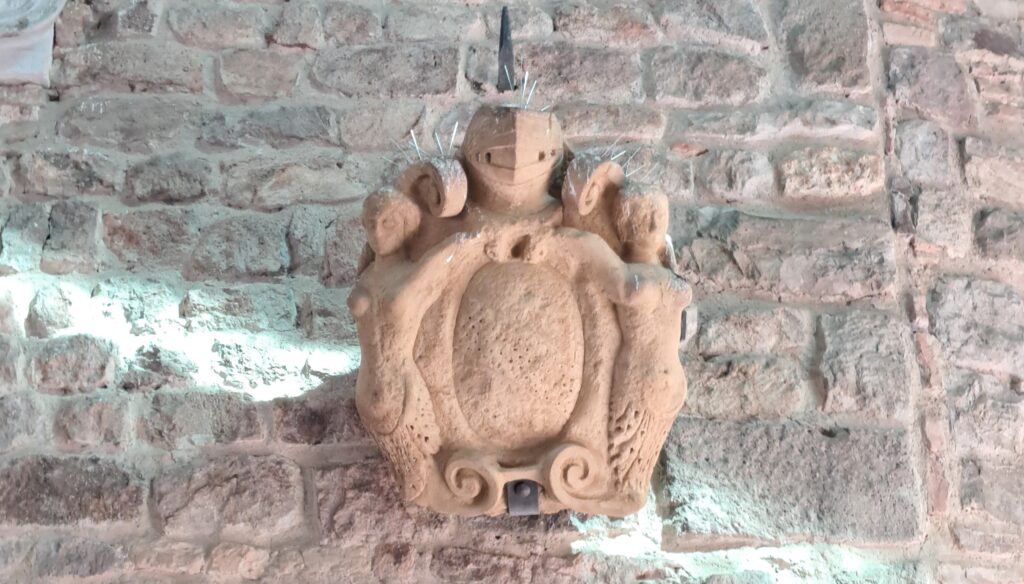
representing Raimondo Solimano, Vicario in 1588.
The original plaque, now missing, bore the inscription:
“raiMONDVS SVLIMANVS /… MDLXXXIIX/ C… POSTERIS … FECIT”
Possible reconstruction:
RAIMONDVS SVLIMANVS
CVM POSTERIS SVIS
MDLXXXIX FECIT
Paraphrased:
“Raimondo Sulimanus, with his descendants, made this in the year 1589.”
On the south wall are the remaining coats of arms.
3 – A plaque with a coat of arms topped by a helmet, decorated with a closed hand holding a scroll and bearing the motto — perhaps alluding to the sowing of grain:
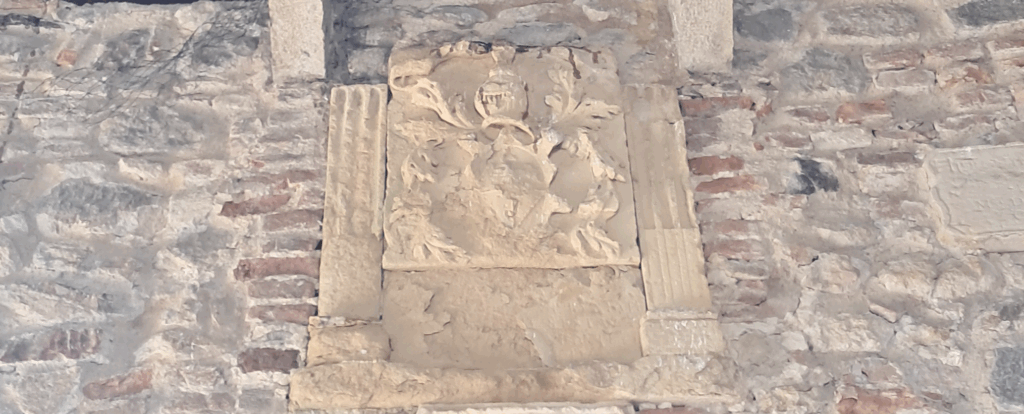
“VENTI POST MVLTAS VNA SERENDI”
Paraphrased:
“After many winds, one alone is favorable for sowing.”
In modern terms, we might say:
“After countless obstacles, one right opportunity is enough to start anew.”
4 – Below it is another plaque with the inscription:
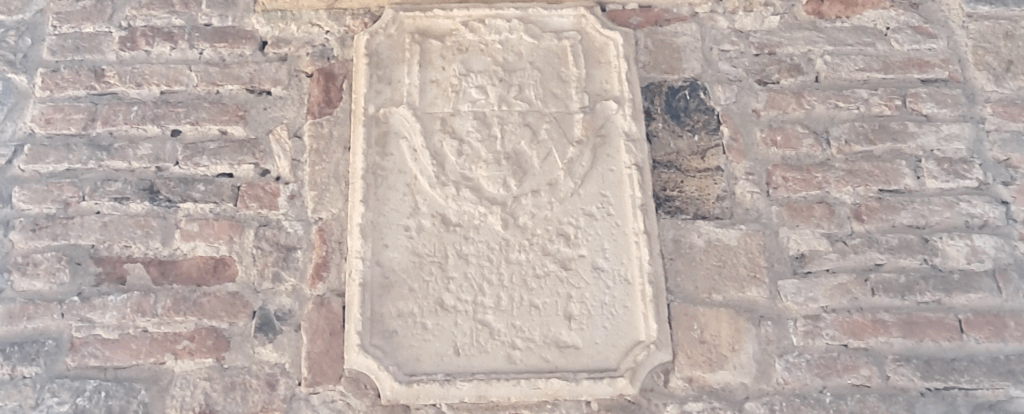
“RESTAVRATO / ANNO MDCCLXXXIII / ANTONIO FILIPATO / VICARIO”
Paraphrased:
“It was restored in the year 1783 by Antonio Filipato, Vicario.”
5 – Next to it is a marble plaque
missing the coat of arms of the Capodivacca family, which bears the inscription:
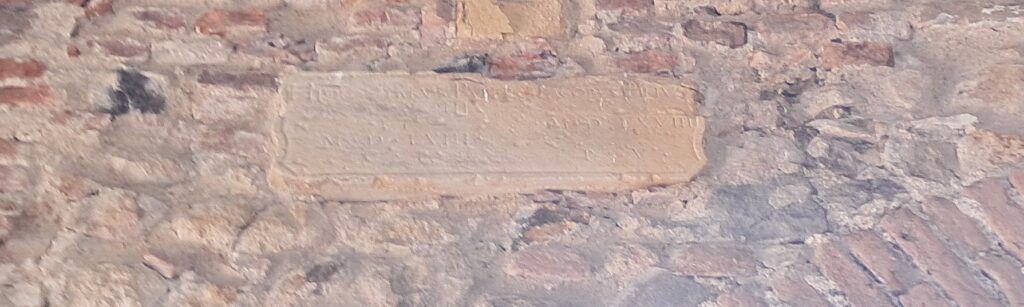
“HIERON IMVS PATER MDXIV ET M.DLVII / C F. IACOBVS FILIVS / MDLXVIII / P.V.”
Translated:
“Geronimo, the father, born in the year of Our Lord 1514, died in 1557. His son Giacomo placed [this memorial] in the year of Our Lord 1568.”
6 – The sixth and last coat of arms, located in the upper right corner, is also in marble and depicts an eight-spoked wagon wheel
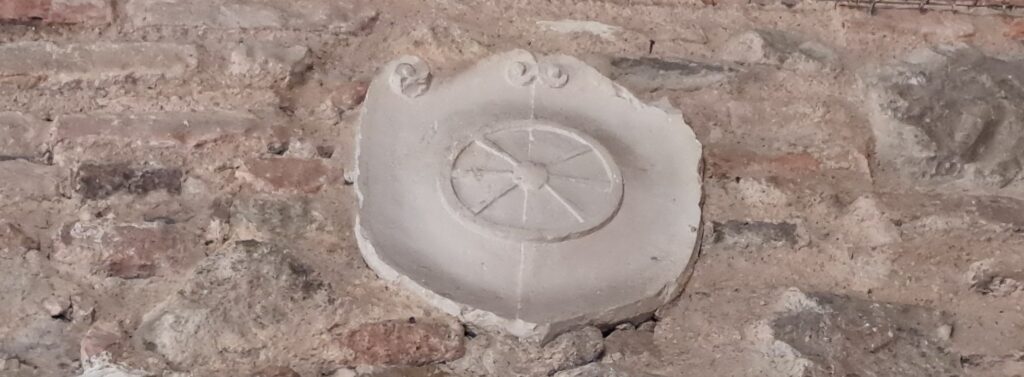
symbol of the Da Rio family, which produced three Vicari in the 15th century.
Other now-lost coats of arms once bore plaques with the inscription:
“Arma tempre belli litterae tempore pacis praecedunt”
Meaning:
“In time of war, arms take precedence; in time of peace, letters.”
Another plaque read:
“sperne vivendo quae retinere non potes – vide ne quod perspicis male opereanfo contemnas”
Translated from Latin:
“Despise in life the goods you cannot keep, and take care not to neglect, through your misconduct, what you can already glimpse beyond.”
GO BACK TO THE MAP